Family Owned
6 Years of Experience
100% local
American Auto Connection started the way most real businesses do not with a business plan, but with a skill, a garage, and a commitment to doing the work right. We began tinting cars in Clayton before anyone gave us a shop, a sign, or a review. We were just two guys who believed that if you do quality work and treat people with respect, the rest follows.
That belief turned into a reputation. That reputation turned into a business. And that business is now American Auto Connection and currently operating out of our facility at 6140 Veterans Pkwy in Garner, NC, serving clients across the Triangle and beyond.
The Triangle has been our home since day one. We grew up around these roads, these neighborhoods, and these communities. When we opened our doors in Garner, we were not starting over and we were bringing what we already knew how to do and setting up somewhere we could serve people properly.
Come See Us:
Address: 6140 Veterans Pkwy Suite 150, Garner, NC 27529
Phone: (+1 (919) 623-9450
Hours: Monday – Friday, 9:00AM– 5:00PM
We are honest — If your paint needs correction before a coating, we tell you. If a service is not right for your situation, we say so.
Lifetime warranty — On every installation we perform. That is not an asterisk its our standard.
We do not cut corners — We use cast vinyl, professional-grade ceramic coatings, and premium window film — the kind of materials that last.
We are local — Not a franchise. Not a chain. We are from here, we work here, and we are accountable here.
Licensed & Insured
Authorized Installer — Premium Window Film & Wraps
Workmanship Warranty on Every Install


We offer a full range of Fastest Tinting Company services throughout Garner, NC:
Automotive window tinting applies a polyester film to the interior surface of vehicle glass, reducing visible light transmission (VLT) and blocking solar infrared energy before it turns into heat inside the cab. In North Carolina, state law requires a minimum 32.5% total VLT — most factory glass transmits about 76% light, so we apply a 40% film to bring the combined reading into full legal compliance at any inspection or traffic stop.
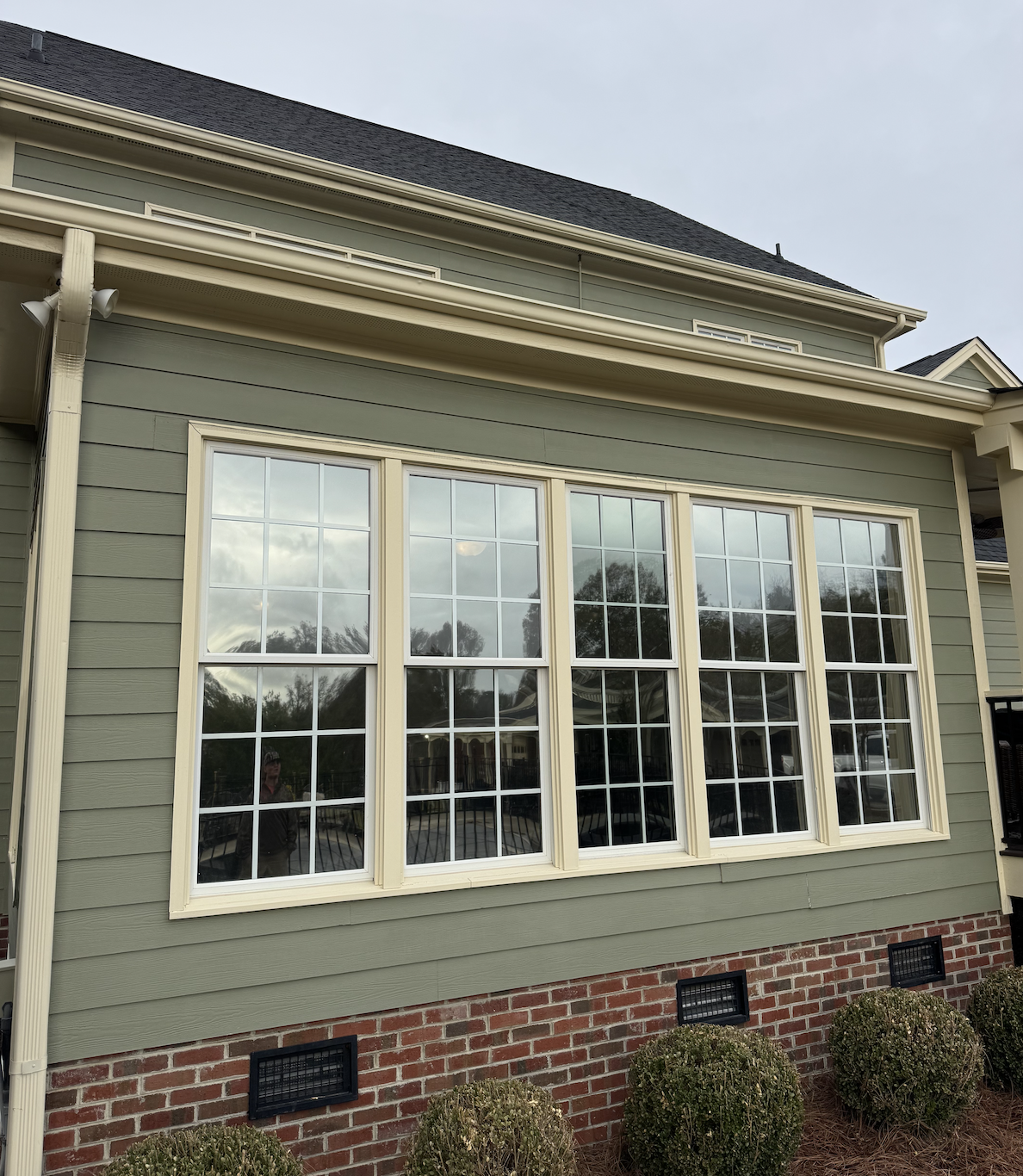
Learn More →Residential window tinting applies solar control film to the interior surface of home windows, blocking UV rays, reducing solar heat gain, and limiting line-of-sight visibility from outside — without permanent alteration to the glass. Film options range from barely-visible solar control that rejects 40–60% of heat with minimal tint effect, to reflective or frosted privacy films — each with different performance profiles for heat rejection, glare, and daytime privacy.
Learn More →Commercial window tinting applies solar control or privacy film to office buildings, retail storefronts, warehouses, and other commercial glass — reducing solar heat gain, cutting glare, and adding privacy or security without structural modification to the building. For large commercial properties with south- or west-facing glass, untreated windows push HVAC systems to handle 300+ BTUs per square foot of solar load per hour — a measurable line item on the monthly utility bill.
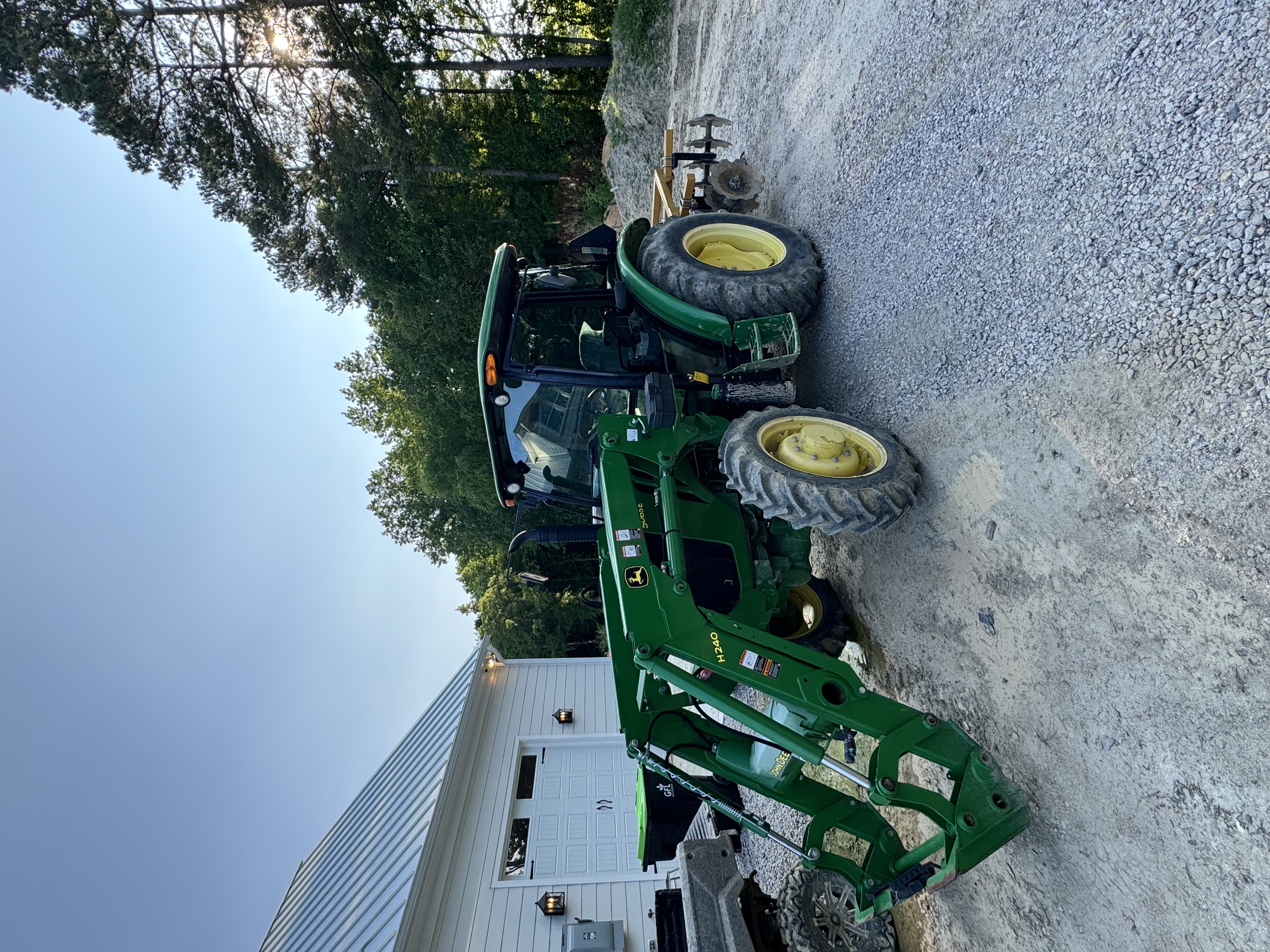
Learn More →Heavy equipment tinting applies commercial-grade window film to the cab glass of excavators, cranes, graders, forklifts, and other construction or agricultural machinery — reducing glare, blocking UV, and lowering cab temperatures for operators working long shifts. Cab glass on heavy equipment is typically single-pane tempered or laminated safety glass — our films bond directly to the interior surface without modifying the glass structure or affecting cab pressurization on enclosed HVAC-equipped units.
Learn More →Vehicle detailing is a comprehensive cleaning and restoration process that addresses every surface of your car — inside and out — at a level a drive-through car wash cannot come close to. A proper detail removes bonded contamination from the paint, deep-cleans every interior surface, and restores trim, glass, and rubber to the condition they were in when the vehicle left the factory. For vehicles with window tint, ceramic coating, or vinyl installed, detailing is also the maintenance service that protects those investments. Accumulated contamination on a ceramic-coated car degrades the hydrophobic layer over time. A properly detailed surface holds its protection longer, looks better between washes, and makes every subsequent service — tint, coating, correction — perform at a higher level.
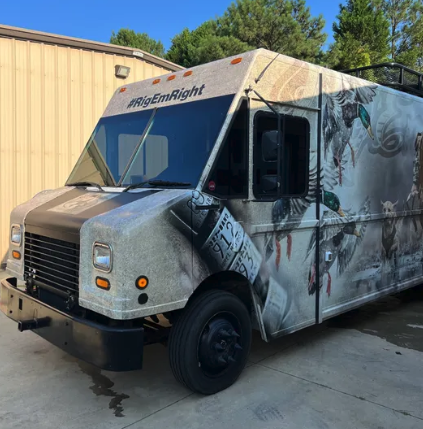
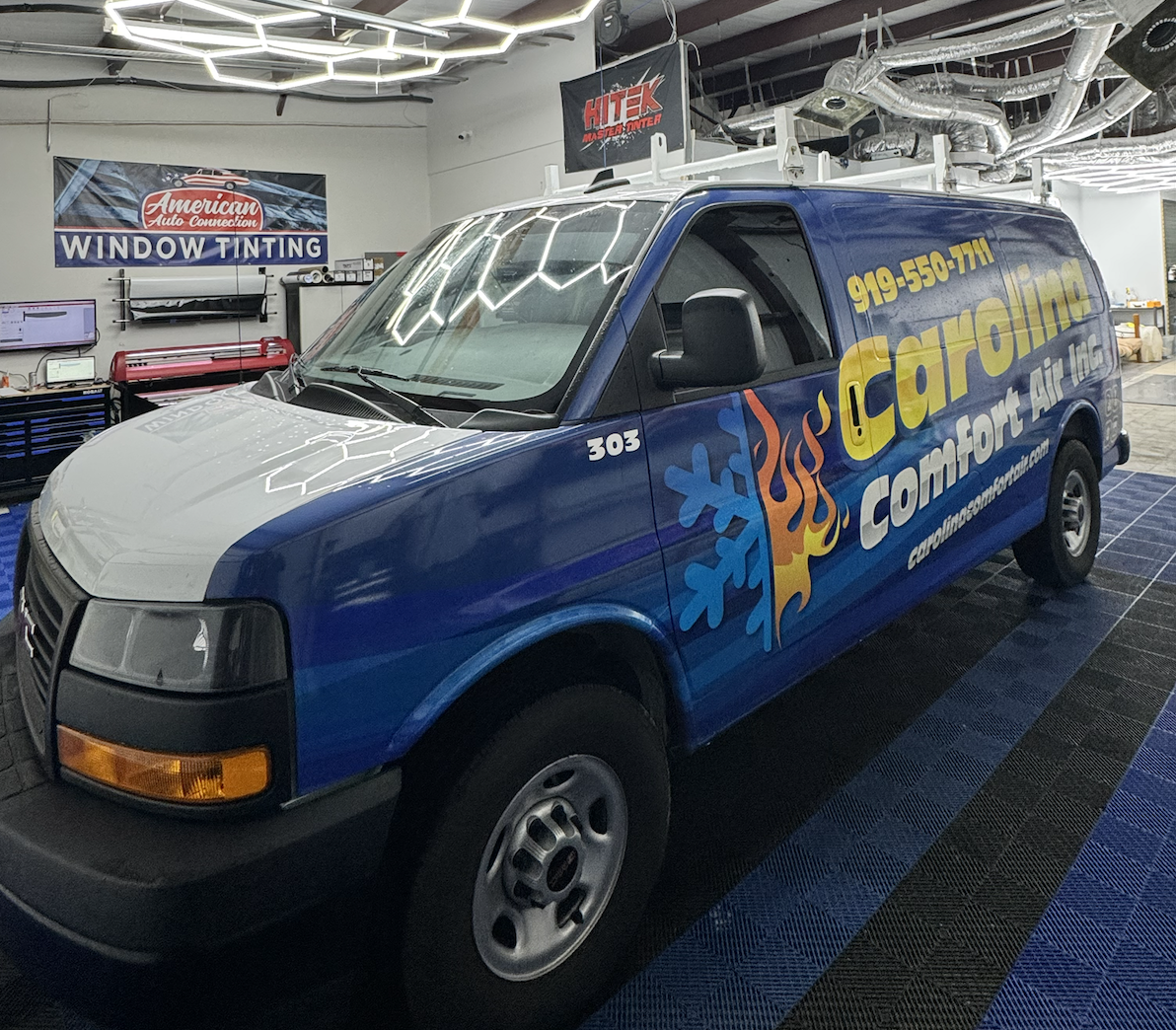
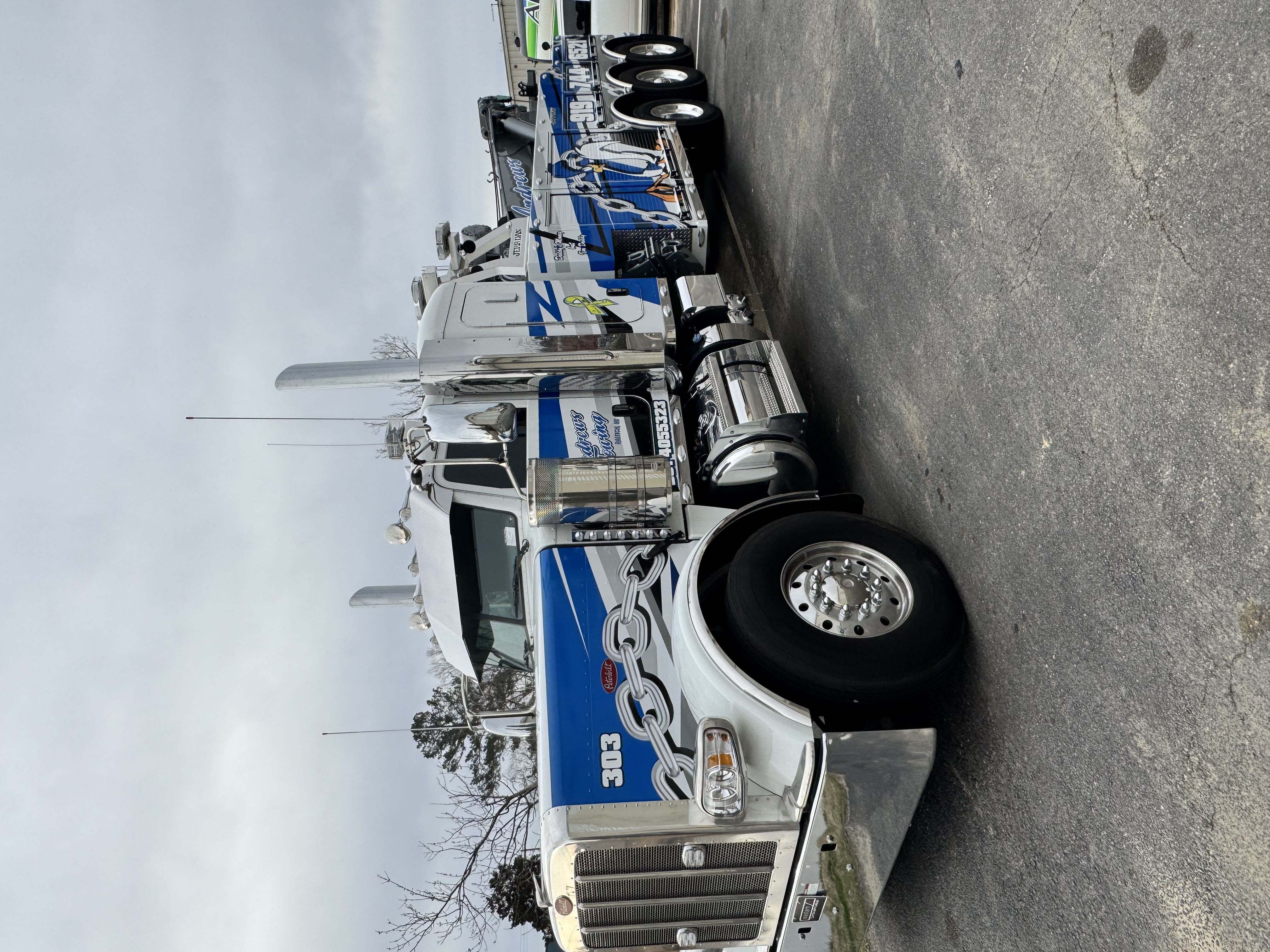
Learn More →Unlike full wraps, spot graphics install in a few hours per vehicle and can be applied to vehicles that are in daily service — no extended downtime required for a van or truck that runs routes every day.
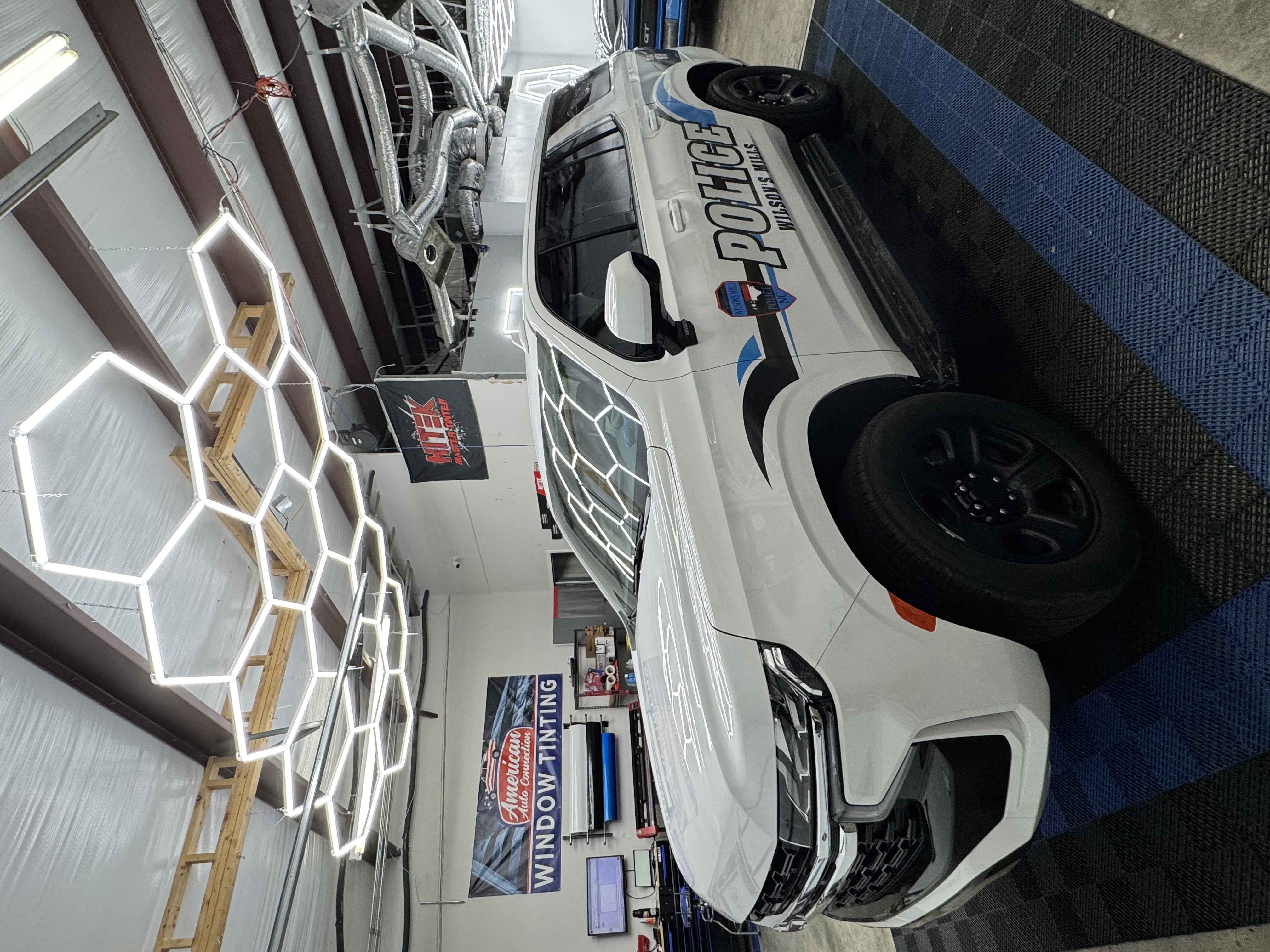
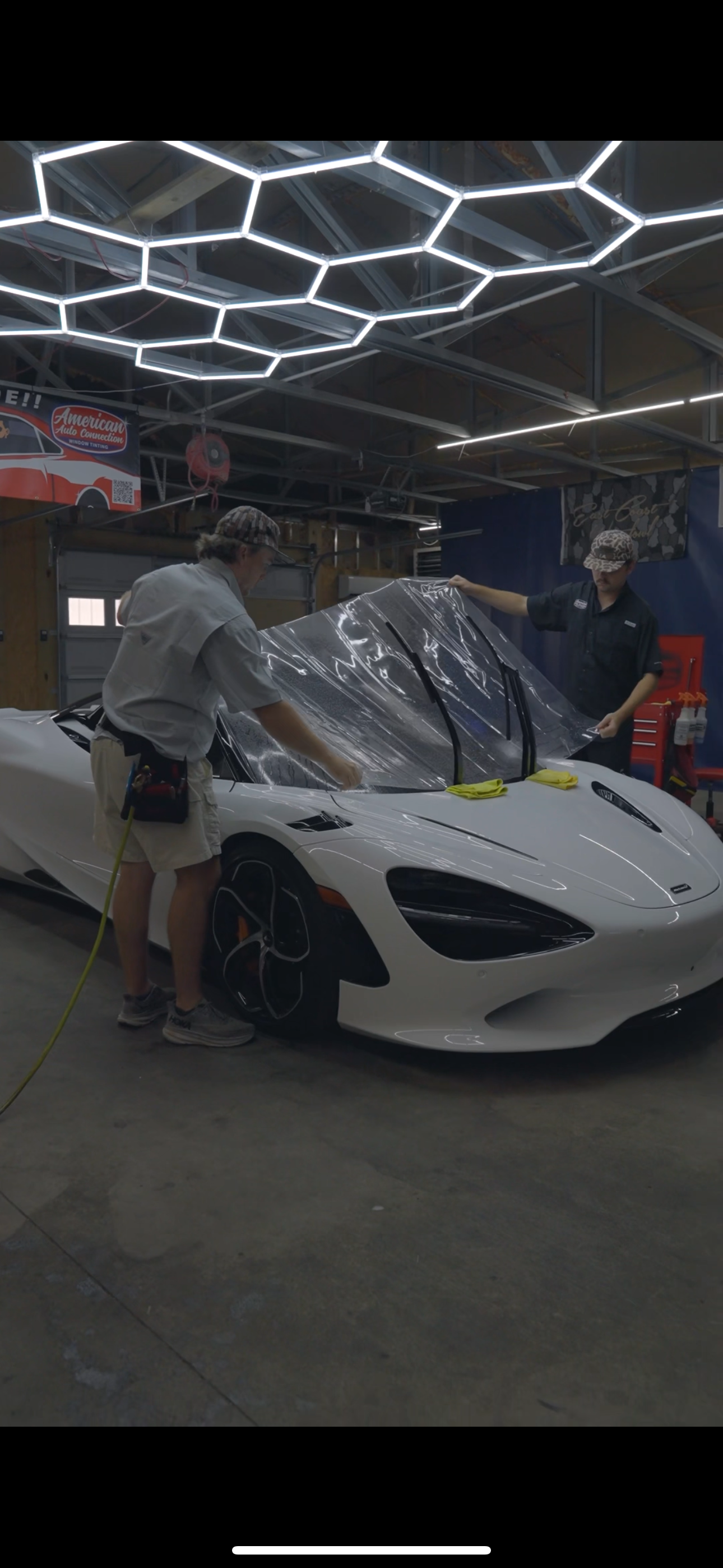
Learn More →Automotive wraps use cast vinyl film applied to a vehicle's exterior panels to change color, add texture, apply custom graphics, or protect factory paint from UV exposure and light road debris. A properly installed full wrap encapsulates every painted panel in 2–4 mil of vinyl — thin enough to be nearly invisible at properly finished seams, thick enough to absorb light debris impact and prevent UV oxidation on the clear coat underneath.
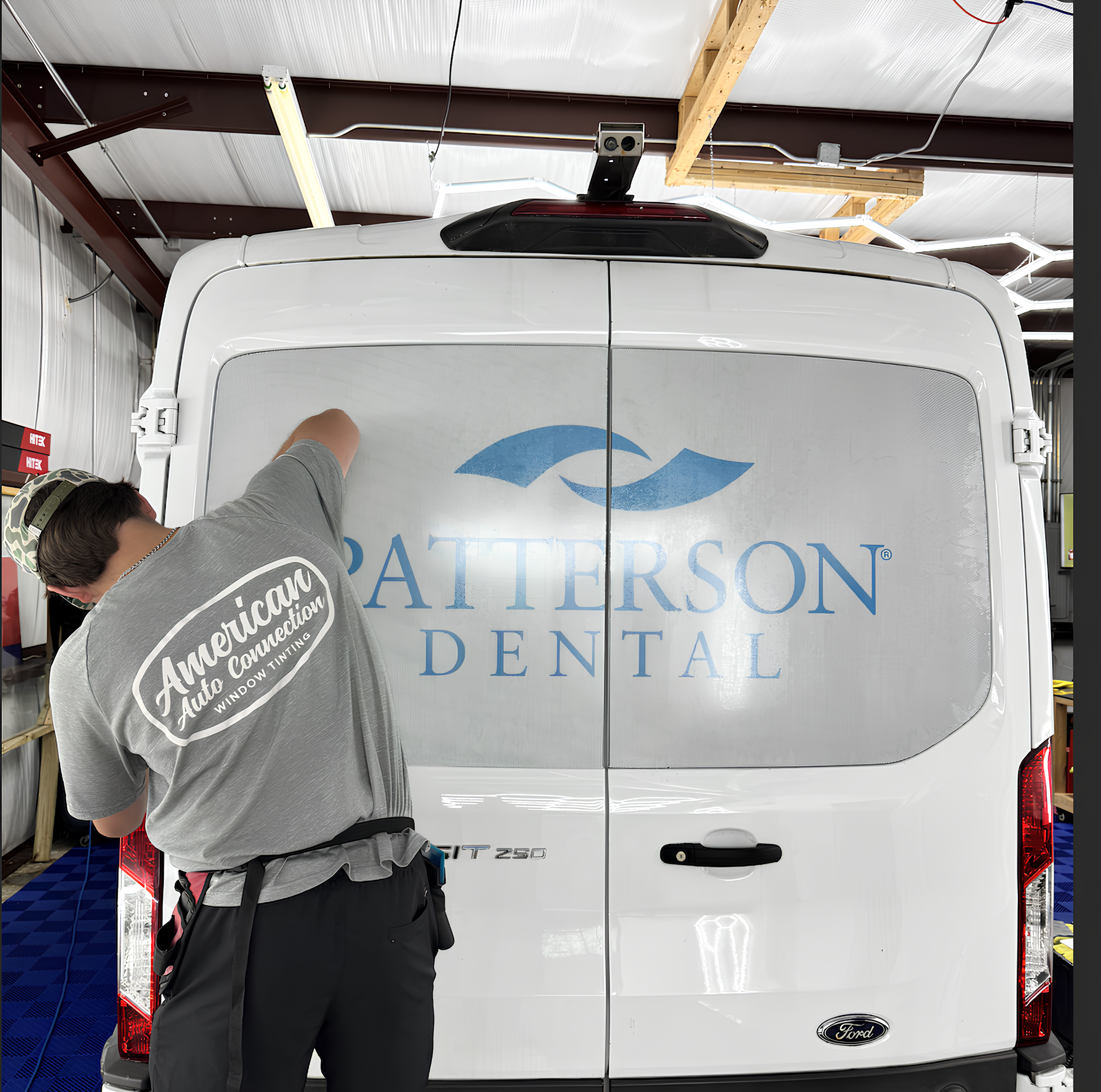
Learn More →Fleet window tinting applies solar control film across multiple commercial or government vehicles in a coordinated process — matching film specifications, VLT levels, and documentation across every unit in the fleet for consistency and compliance. For NC-operating fleets, we tint to the 40% film standard over factory glass to maintain legal compliance at the 32.5% minimum VLT, with per-vehicle documentation available for records, audits, or resale disclosures.
Learn More →Automotive ceramic coating is a liquid polymer applied to a vehicle's painted surfaces that chemically bonds to the clear coat, creating a semi-permanent, hydrophobic protective layer that is significantly harder than factory clear coat. Coating hardness is measured on the pencil hardness (H) scale — quality professional ceramic coatings cure to 7H–9H hardness, compared to factory clear coat at approximately 4H–6H, which is what produces the scratch resistance and self-cleaning hydrophobic properties.
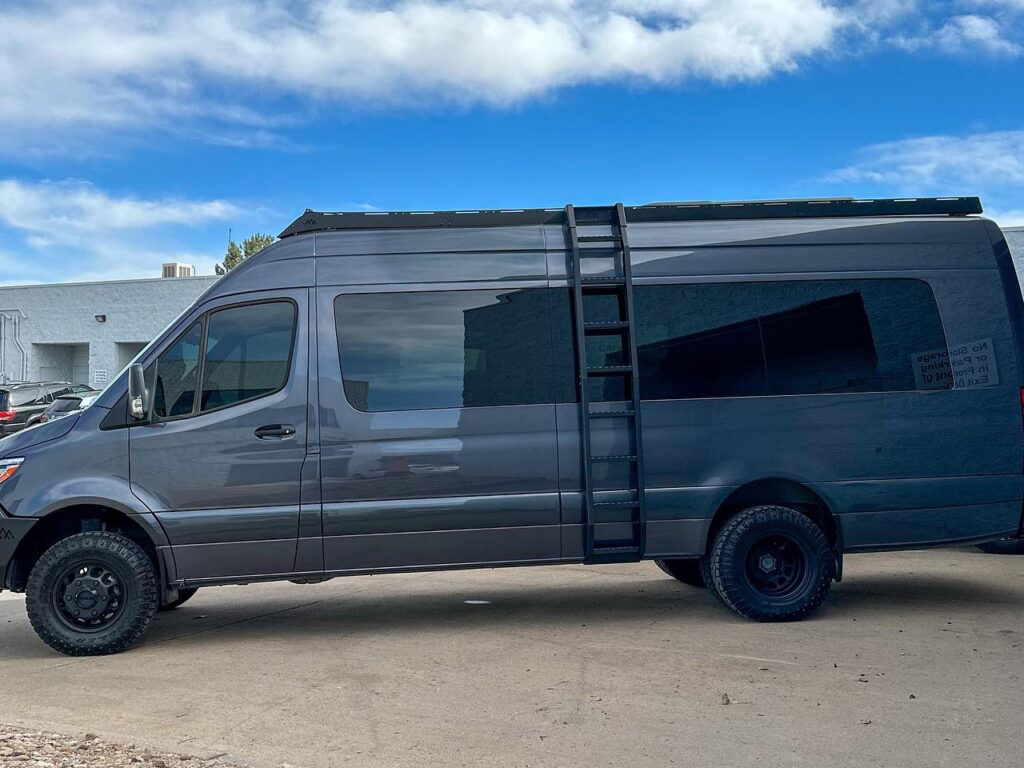
Learn More →RV and Sprinter van window tinting applies solar control film to the cabin, living area, and side windows of motorhomes, travel trailers, cargo conversions, and commercial vans — reducing heat, blocking UV, and adding privacy to large-format mobile spaces. Large vehicle glass — Class A and C coach windows, Sprinter side panels — is often 30–60% larger per pane than standard passenger vehicle glass, requiring film in commercial widths and application technique adapted to oversized and compound-curved panels.
Learn More →Automotive paint correction is a controlled machine polishing process that uses diminishing abrasives to remove a micro-thin layer of clear coat, eliminating surface defects — swirl marks, fine scratches, water etchings — that are trapped within that layer. Clear coat is only 2–4 microns thick total — each correction stage removes 0.5–1.5 microns depending on abrasive grit, which is why a paint depth gauge measurement before starting is not optional; it determines which stages are safe without risking burn-through.
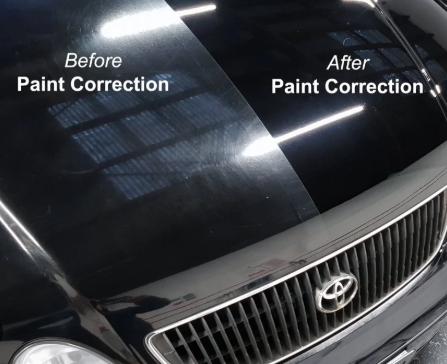
Learn More →Automotive utility and service lighting installation adds aftermarket LED systems to vehicles — light bars, strobe warning lights, grille lights, underbody systems, and work area lighting — to improve on-site visibility, road safety, and operational capability. Light bar and strobe installation requires routing wiring through the cab, mounting hardware to body panels, and connecting to the vehicle's electrical system at the correct amperage — done incorrectly, this creates shorts, blown fuses, and fire risk from overloaded circuits.
Learn More →Step 1
Fill Out Our Online Form
Step 2
Pick Your Service
Step 3
Schedule Your Drop-Off
Step 4
Secure Your Appointment
Step 5
Drop Off Your Vehicle & We Take It From Here
Step 6
Pick Up & Approve
Step 7
Enjoy & Leave Us A Google Review!


Quality cast vinyl color-change wraps last 5–7 years with proper care. Chrome and specialty finishes (color-shift, metallic flake) may show wear slightly sooner under intense UV exposure than standard matte or gloss films.
Properly installed vinyl graphics last 5–7 years with normal vehicle use and NC weather exposure. Reflective film and specialty finishes may have slightly shorter lifespans in high direct-sun environments. All installations include our workmanship warranty.
A standard full detail on a passenger car or crossover takes 3–6 hours depending on size and condition. Heavily soiled interiors, pet hair, or significant exterior contamination add time. We give you a realistic estimate when you book and a confirmed timeline when you drop off.
NC passenger vehicle tint laws do not apply to heavy equipment operating off public roads. For equipment that does operate on public roads — road graders, dump trucks, slow-moving machinery — we apply films that maintain adequate visibility per NC safety standards.
NC law requires a minimum 32.5% total VLT on all windows. Since factory glass already transmits about 76% light, we apply a 40% film to bring your vehicle into full legal compliance. We will not install film that puts you below the legal threshold.
The level of visible light reduction depends entirely on the film selected. Solar control films can reject significant heat while reducing visible light by only 15–20%. We help you choose the right film for each room based on your light preferences and privacy needs.
We select films in the 35–50% VLT range for equipment cabs — enough to significantly reduce glare and heat without darkening the cab to a level that hurts visibility. Operator sight lines are always the priority when we recommend a film for a specific cab configuration.
A standard full detail on a passenger car or crossover takes 3–6 hours depending on size and condition. Heavily soiled interiors, pet hair, or significant exterior contamination add time. We give you a realistic estimate when you book and a confirmed timeline when you drop off.
Full vehicle tinting in the Garner area runs roughly $200–$450 for most personal vehicles, depending on window count and vehicle size. Trucks, SUVs, and vehicles with complex rear glass panels run toward the higher end. We give exact quotes after seeing the vehicle.
Most homeowners see 10–30% reductions in summer cooling costs after residential film installation. In a typical NC home spending $250/month on summer cooling, that is $25–$75 saved per month during peak season — and the film pays for itself in energy savings alone within 2–4 years.

American Auto Connection Blogs
Window tinting tips, wrap guides, ceramic coating advice, and paint care insights from
American Auto Connection in Garner, NC. Serving the Triangle.
If you drive in North Carolina and you are thinking about getting your windows tinted, or if you already have tint and you are not sure if it is legal, this post is for you. ...more
Window Tinting
March 19, 2026•3 min read

BUSINESS
SERVICES
SERVICE AREAS
OPERATING HOURS
Sun: CLOSED
Mon: 9:00 AM - 5:00 PM
Tue: 9:00 AM - 5:00 PM
Wed: 9:00 AM - 5:00 PM
Thu: 9:00 AM - 5:00 PM
Fri: 9:00 AM - 5:00 PM
Sat: CLOSED
Call Us: +1 (919) 623-9450
Email: [email protected]
Address: 6140 Veterans Pkwy suite 150, Garner, NC 27529
Copyright 2026 © | American Auto Connection
The Fastest Growing Tinting Company