Fleet & Commercial Vehicle Tinting in Garner, NC

Fleet window tinting applies solar control film across multiple commercial or government vehicles in a coordinated process — matching film specifications, VLT levels, and documentation across every unit in the fleet for consistency and compliance. For NC-operating fleets, we tint to the 40% film standard over factory glass to maintain legal compliance at the 32.5% minimum VLT, with per-vehicle documentation available for records, audits, or resale disclosures.

Licensed & Insured

Authorized Installer — Premium Window Film & Wraps

Fully Licensed & Insured

Workmanship Warranty on Every Install

What to Expect With Fleet & Commercial Vehicle Tinting
  • Fleet scheduling coordination: We work directly with fleet managers to batch vehicles efficiently — processing 3–5 units per day in our Garner bay. For large fleets where vehicles cannot leave the yard, mobile service is available. We match our schedule to your operations, not the other way around.
  • Downtime per vehicle: Most commercial vehicles — vans, trucks, SUVs — take 2–3 hours per unit. Specialty vehicles (ambulances, large commercial trucks) take 3–4 hours depending on glass configuration. We track each vehicle's installation details for your fleet records.
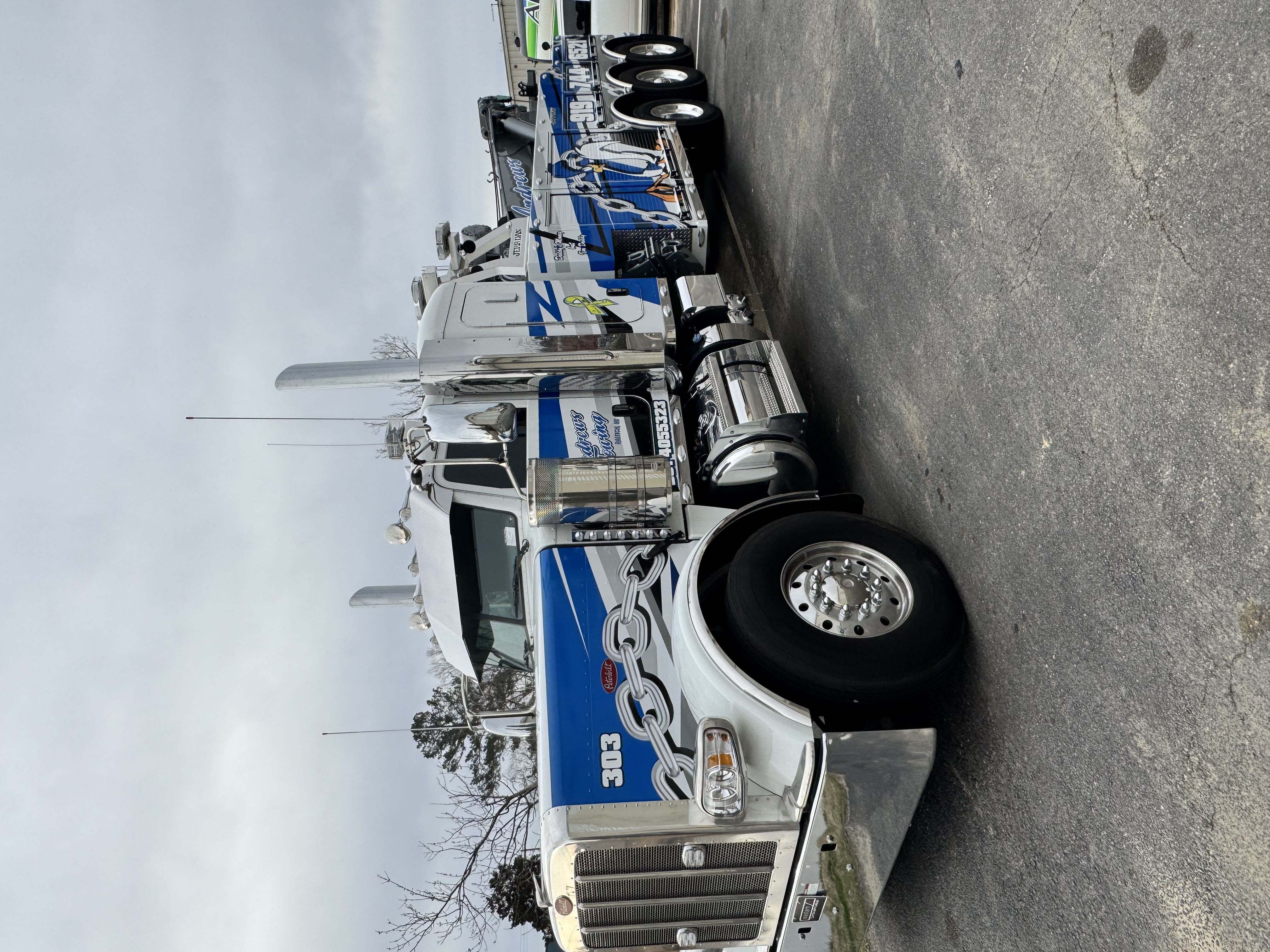
  • Downtime per vehicle: Most commercial vehicles — vans, trucks, SUVs — take 2–3 hours per unit. Specialty vehicles (ambulances, large commercial trucks) take 3–4 hours depending on glass configuration. We track each vehicle's installation details for your fleet records.
Fleet & Commercial Vehicle Tinting
Why Fleet & Commercial Vehicle Tinting Matters
  • Driver comfort and retention: Commercial drivers spending 8+ hour shifts in direct sun experience real fatigue and UV skin exposure. In the Raleigh area's tight commercial driver labor market, vehicle comfort is a real retention factor — and film costs a fraction of what replacing a trained driver does.
  • Interior preservation across a fleet: For a fleet of 20 vans, dashboard cracking, seat fading, and UV-related interior breakdown means $3,000–$10,000 in replacement costs across a 5-year lifecycle. Tinting all 20 vehicles costs significantly less than that — and the film pays for itself within the first replacement cycle.
  • Legal compliance documentation: Industries including medical transport, law enforcement, and corrections may require specific VLT documentation for fleet vehicles during audits or inspections. We provide per-vehicle install records and film spec documentation to support compliance requirements.
Why Fleet & Commercial Vehicle Tinting Matters
How American Auto Connection Handles Fleet & Commercial Vehicle Tinting
  • Dedicated point of contact for fleet accounts: Fleet jobs get a single contact on our end for scheduling, documentation, and any re-work. We do not hand off fleet accounts to different techs each visit — consistency in who handles the account translates to consistent results across vehicles.
  • Volume pricing for fleet accounts: We offer fleet pricing for five or more vehicles, quoted per vehicle based on vehicle type, glass complexity, and total unit count. We provide a binding written quote before any work begins — no open-ended estimates.
  • Film matched to fleet use case: Law enforcement, medical transport, and commercial delivery fleets have different requirements for VLT, heat rejection, and privacy levels. We match the film type to the specific operational role of the vehicles — not a one-size-fits-all approach across the fleet.
How American Auto Connection Handles Fleet & Commercial Vehicle Tinting
Common Questions About Fleet & Commercial Vehicle Tinting
What is the minimum fleet size for fleet pricing?
We extend fleet pricing to accounts with five or more vehicles. Contact us with your vehicle count and type mix for a written fleet quote — we confirm pricing before any work begins.
Can you handle government or law enforcement fleet accounts?
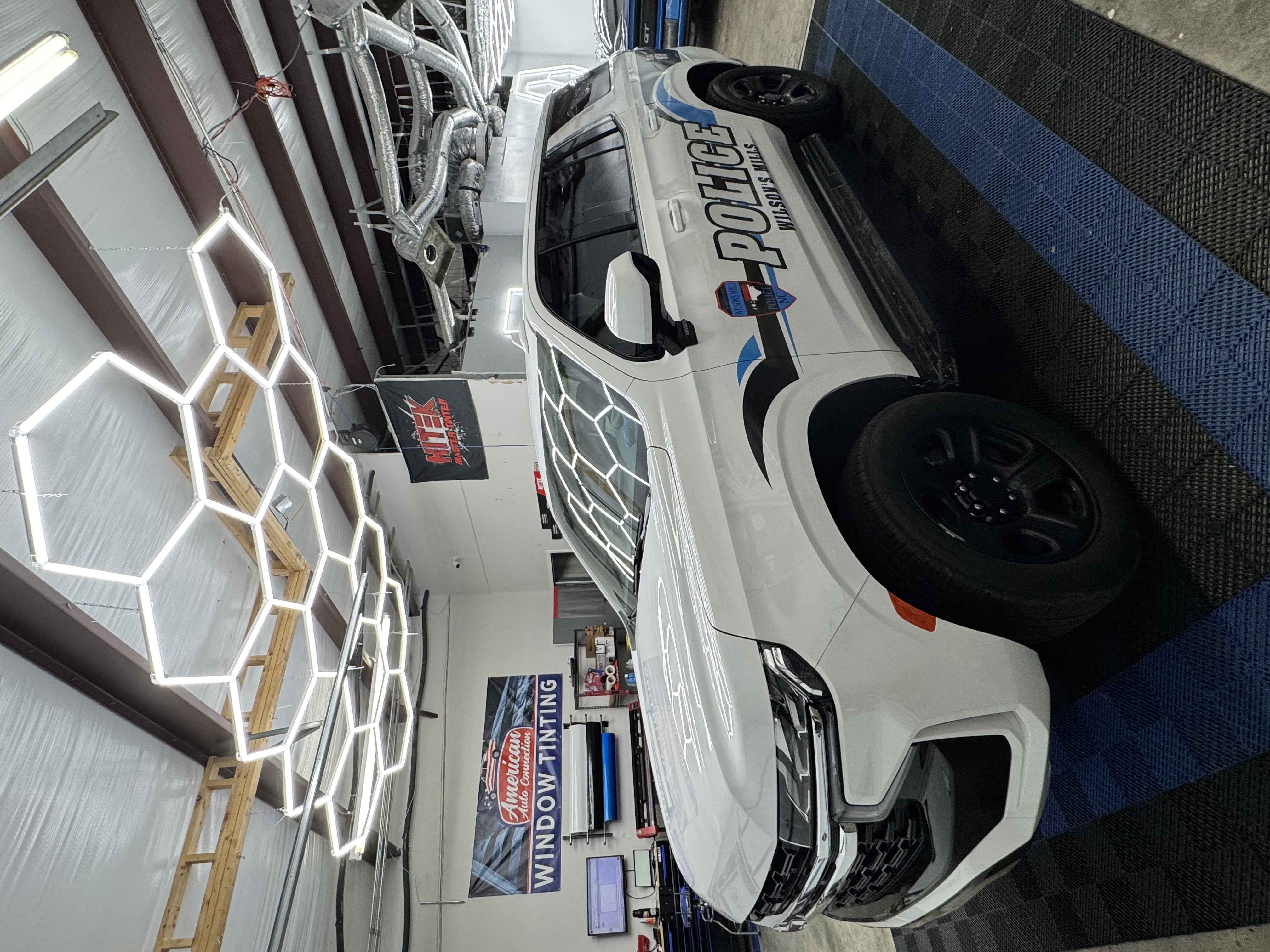
Yes. We have tinted vehicles for the Wilson Mills Police Force and Raleigh State Police, and we understand law enforcement tinting requirements, documentation needs, and scheduling constraints around vehicles that cannot be out of rotation for long.
How do you handle fleet vehicles that are in daily active use?
We coordinate with your fleet manager to batch vehicles on their off-days or during low-demand periods. For operations where vehicles cannot leave the yard, we bring mobile equipment to your location for qualifying fleet sizes.
Yes. We provide per-vehicle documentation that includes install date, film brand and specification, VLT rating, and our warranty terms. This is available for compliance records, resale documentation, or insurance purposes.
Yes. Film removal is a separate step we perform before re-tinting. Old film removal typically adds 30–60 minutes per vehicle. We quote removal cost in the fleet estimate so the total is clear before we begin.

OUR SIMPLE STEP BY STEP PROCESS

  • Step 1
    Fill Out Our Online Form

  • Step 2
    Pick Your Service

  • Step 3
    Schedule Your Drop-Off

  • Step 4
    Secure Your Appointment

  • Step 5
    Drop Off Your Vehicle & We Take It From Here

  • Step 6
    Pick Up & Approve

  • Step 7
    Enjoy & Leave Us A Google Review!

DISCOVER WHAT Garner, NC CUSTOMERS HAVE TO SAY ABOUT American Auto Connection

OUR REVIEWS

REVIEW US

ON GOOGLE

Where We Provide

Fleet & Commercial Vehicle Tinting

  • Garner, NC

  • Clayton, NC

  • Cary, NC

  • Chapel Hill, NC

  • Wilson, NC

  • Apex, NC

  • Knightdale, NC

  • Wake Forest, NC

  • Durham, NC

  • Sanford, NC

https://maps.app.goo.gl/yyaKuGPhVaycUNXP6

Other Services We Provide

Need something else? Check out the

other services we offer for Fastest Tinting Company.

What We Can Help You With.

Our Services
Automotive Window Tinting

Automotive window tinting applies a polyester film to the interior surface of vehicle glass, reducing visible light transmission (VLT) and blocking solar infrared energy before it turns into heat inside the cab. In North Carolina, state law requires a minimum 32.5% total VLT — most factory glass transmits about 76% light, so we apply a 40% film to bring the combined reading into full legal compliance at any inspection or traffic stop.

Learn More →
Residential Window Tinting

Residential window tinting applies solar control film to the interior surface of home windows, blocking UV rays, reducing solar heat gain, and limiting line-of-sight visibility from outside — without permanent alteration to the glass. Film options range from barely-visible solar control that rejects 40–60% of heat with minimal tint effect, to reflective or frosted privacy films — each with different performance profiles for heat rejection, glare, and daytime privacy.

Learn More →
Commercial Window Tinting

Commercial window tinting applies solar control or privacy film to office buildings, retail storefronts, warehouses, and other commercial glass — reducing solar heat gain, cutting glare, and adding privacy or security without structural modification to the building. For large commercial properties with south- or west-facing glass, untreated windows push HVAC systems to handle 300+ BTUs per square foot of solar load per hour — a measurable line item on the monthly utility bill.

Learn More →
Heavy Equipment Tinting

Heavy equipment tinting applies commercial-grade window film to the cab glass of excavators, cranes, graders, forklifts, and other construction or agricultural machinery — reducing glare, blocking UV, and lowering cab temperatures for operators working long shifts. Cab glass on heavy equipment is typically single-pane tempered or laminated safety glass — our films bond directly to the interior surface without modifying the glass structure or affecting cab pressurization on enclosed HVAC-equipped units.

Learn More →
Vehicle Detailing

Vehicle detailing is a comprehensive cleaning and restoration process that addresses every surface of your car — inside and out — at a level a drive-through car wash cannot come close to. A proper detail removes bonded contamination from the paint, deep-cleans every interior surface, and restores trim, glass, and rubber to the condition they were in when the vehicle left the factory. For vehicles with window tint, ceramic coating, or vinyl installed, detailing is also the maintenance service that protects those investments. Accumulated contamination on a ceramic-coated car degrades the hydrophobic layer over time. A properly detailed surface holds its protection longer, looks better between washes, and makes every subsequent service — tint, coating, correction — perform at a higher level.

Learn More →
Business Graphic Installation

Unlike full wraps, spot graphics install in a few hours per vehicle and can be applied to vehicles that are in daily service — no extended downtime required for a van or truck that runs routes every day.

Learn More →
Automotive Wrap

Automotive wraps use cast vinyl film applied to a vehicle's exterior panels to change color, add texture, apply custom graphics, or protect factory paint from UV exposure and light road debris. A properly installed full wrap encapsulates every painted panel in 2–4 mil of vinyl — thin enough to be nearly invisible at properly finished seams, thick enough to absorb light debris impact and prevent UV oxidation on the clear coat underneath.

Learn More →
Fleet & Commercial Vehicle Tinting

Fleet window tinting applies solar control film across multiple commercial or government vehicles in a coordinated process — matching film specifications, VLT levels, and documentation across every unit in the fleet for consistency and compliance. For NC-operating fleets, we tint to the 40% film standard over factory glass to maintain legal compliance at the 32.5% minimum VLT, with per-vehicle documentation available for records, audits, or resale disclosures.

Learn More →
Automotive Ceramic Coating

Automotive ceramic coating is a liquid polymer applied to a vehicle's painted surfaces that chemically bonds to the clear coat, creating a semi-permanent, hydrophobic protective layer that is significantly harder than factory clear coat. Coating hardness is measured on the pencil hardness (H) scale — quality professional ceramic coatings cure to 7H–9H hardness, compared to factory clear coat at approximately 4H–6H, which is what produces the scratch resistance and self-cleaning hydrophobic properties.

Learn More →
RV & Sprinter Van Tinting

RV and Sprinter van window tinting applies solar control film to the cabin, living area, and side windows of motorhomes, travel trailers, cargo conversions, and commercial vans — reducing heat, blocking UV, and adding privacy to large-format mobile spaces. Large vehicle glass — Class A and C coach windows, Sprinter side panels — is often 30–60% larger per pane than standard passenger vehicle glass, requiring film in commercial widths and application technique adapted to oversized and compound-curved panels.

Learn More →
Automotive Paint Correction

Automotive paint correction is a controlled machine polishing process that uses diminishing abrasives to remove a micro-thin layer of clear coat, eliminating surface defects — swirl marks, fine scratches, water etchings — that are trapped within that layer. Clear coat is only 2–4 microns thick total — each correction stage removes 0.5–1.5 microns depending on abrasive grit, which is why a paint depth gauge measurement before starting is not optional; it determines which stages are safe without risking burn-through.

Learn More →
Automotive Service Lighting

Automotive utility and service lighting installation adds aftermarket LED systems to vehicles — light bars, strobe warning lights, grille lights, underbody systems, and work area lighting — to improve on-site visibility, road safety, and operational capability. Light bar and strobe installation requires routing wiring through the cab, mounting hardware to body panels, and connecting to the vehicle's electrical system at the correct amperage — done incorrectly, this creates shorts, blown fuses, and fire risk from overloaded circuits.

Learn More →

Not sure what you need?

Call us at +1 (919) 623-9450 and we'll help you figure it out.

Ready to Move Forward?

If you need Fleet & Commercial Vehicle Tinting

or unsure and have questions let's talk.

We'll answer your questions, provide a clear estimate, and schedule a time that works for you.

Call Us: +1 (919) 623-9450

Address: 6140 Veterans Pkwy suite 150, Garner, NC 27529

Copyright 2026 © | American Auto Connection

The Fastest Growing Tinting Company