RV & Sprinter Van Tinting in Garner, NC

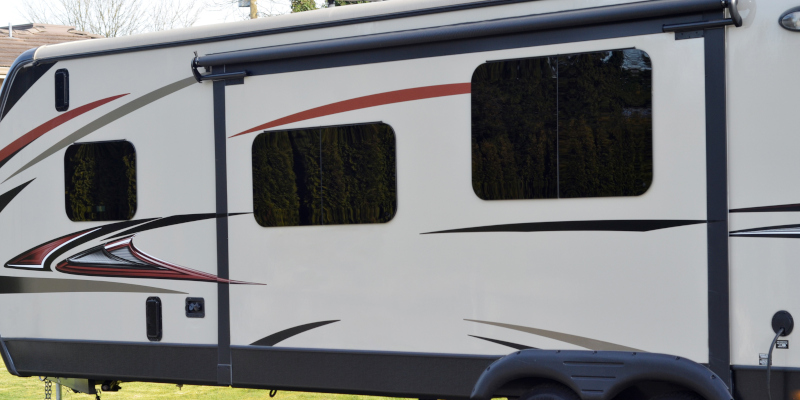
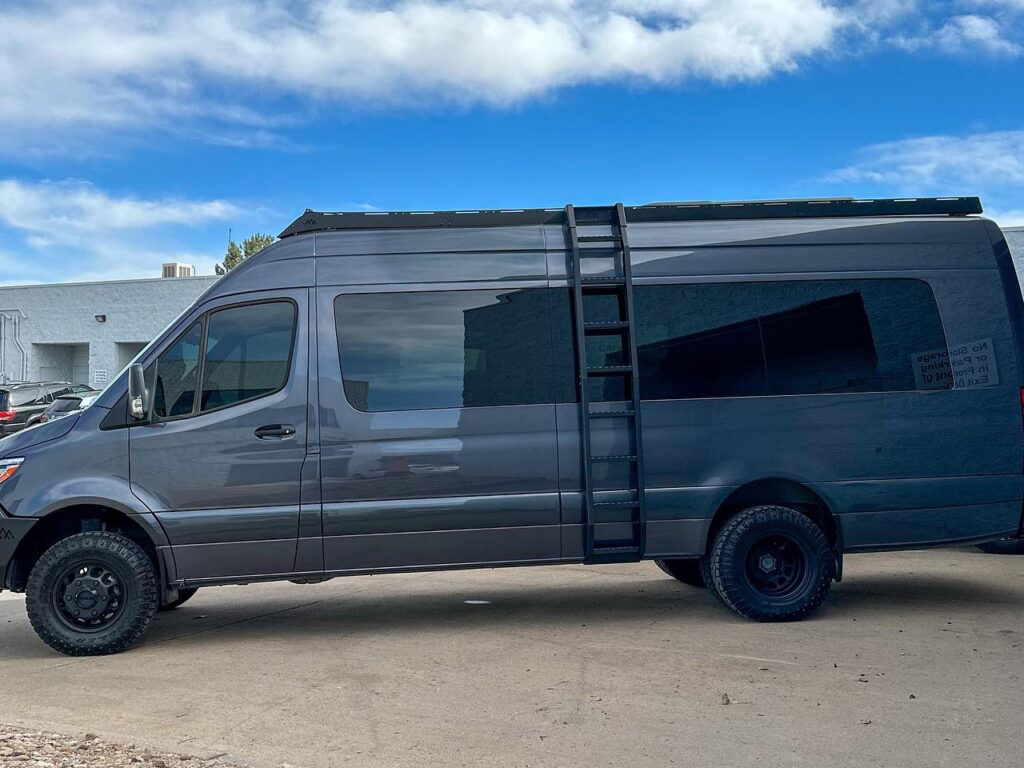
RV and Sprinter van window tinting applies solar control film to the cabin, living area, and side windows of motorhomes, travel trailers, cargo conversions, and commercial vans — reducing heat, blocking UV, and adding privacy to large-format mobile spaces. Large vehicle glass — Class A and C coach windows, Sprinter side panels — is often 30–60% larger per pane than standard passenger vehicle glass, requiring film in commercial widths and application technique adapted to oversized and compound-curved panels.

Licensed & Insured

Authorized Installer — Premium Window Film & Wraps

Fully Licensed & Insured

Workmanship Warranty on Every Install

What to Expect With RV & Sprinter Van Tinting
  • Job timeline: A Sprinter van with driver area and cargo windows takes 3–5 hours. Full-size Class A and C motorhomes with multiple cabin windows run 6–8 hours. We schedule large vehicles in our Garner bay and need at least 24 hours advance notice to confirm bay availability for oversized units.
  • Vehicle size and access: Our Garner facility accommodates vehicles up to approximately 35 feet. Longer coaches may require an outdoor-adjacent install with portable canopy setup for weather protection during application. Contact us before booking with your vehicle length.
  • Zone-specific film selection: Driver compartments need VLT that supports safe visibility while driving. Living areas and sleeping compartments benefit from stronger privacy film. We apply different specifications to different zones in a single appointment — not one film across everything.
RV & Sprinter Van Tinting
Why RV & Sprinter Van Tinting Matters
  • Interior heat load in a parked coach: A parked Class A coach in NC summer sun can reach 130–150°F inside within 30 minutes. That heat load damages slide-out seals, degrades electronics, and forces the coach AC to run at full capacity from shore power or generator — accelerating wear on systems that cost $3,000–$8,000 to replace.
  • UV damage to premium RV interiors: Motorhome interiors include fabric window valances, wood veneer cabinetry, leather dinette seating, and integrated electronics — all UV-sensitive. Quality film blocks 99% of UV, dramatically slowing the interior deterioration that hits rigs hard during full sun camping seasons in NC.
  • Mobile business and conversion resale value: For Sprinter-based mobile businesses (salons, spas, grooming vans) operating in the Garner-Raleigh market, window tinting directly affects client experience and professional appearance. A well-appointed Sprinter conversion retains measurably more resale value than an unprotected one.
Why RV & Sprinter Van Tinting Matters
How American Auto Connection Handles RV & Sprinter Van Tinting
  • Commercial-width film for large panes: RV and Sprinter side glass often exceeds 48 inches in width — standard automotive film widths cannot span these panes without a seam. We source film in 60–72 inch commercial widths to eliminate visible seams on large coach windows wherever glass dimensions allow.
  • Wet application technique for large panels: Large-format film requires experienced wet-application technique and oversized squeegees to avoid trapping air in the adhesive on long, flat glass runs. Application technique on coach glass is different from passenger vehicles — we adapt the process to the glass size.
  • Curved conversion glass handled correctly: Many Sprinter conversions use curved, tempered porthole or bubble windows in the buildout — not flat OEM glass. We have experience fitting film on curved conversion glass without distortion or adhesion failure at the edges where the curve meets flat surfaces.
How American Auto Connection Handles RV & Sprinter Van Tinting
Common Questions About RV & Sprinter Van Tinting
What VLT do you recommend for a motorhome?
For driver-area glass we recommend 35–40% VLT for visibility and heat rejection. For living area and bedroom windows, 20–35% depending on privacy preference. We discuss zone-specific film selection during the appointment and can apply different specs per zone.
Can you tint an RV windshield?
NC law restricts windshield tinting to a top eyebrow strip for vehicles operating on public roads. We apply the legal eyebrow strip and can tint all other cab and living area glass to your preferred VLT within legal limits.
How much does RV or Sprinter tinting cost?
Sprinter van tinting (cargo plus driver windows) typically runs $300–$600. Full Class A or C motorhome tinting runs $600–$1,200 depending on window count and glass size. Prices are quoted after a walk-around assessment — window count varies significantly between makes and models.
Does tinting affect the view from inside while camping?
Lighter films in the 35–50% VLT range maintain very clear outward visibility while cutting glare and heat. Privacy films in the 15–20% range have more impact on night-time outward visibility. We help you balance visibility and privacy during film selection.
Can you tint a Sprinter conversion with custom or non-OEM windows?
Yes. We have worked on conversions with non-standard glass shapes, curved porthole windows, and sliding cargo door glass. We assess the configuration during consultation and quote accordingly — nothing is ruled out until we see the vehicle.

OUR SIMPLE STEP BY STEP PROCESS

  • Step 1
    Fill Out Our Online Form

  • Step 2
    Pick Your Service

  • Step 3
    Schedule Your Drop-Off

  • Step 4
    Secure Your Appointment

  • Step 5
    Drop Off Your Vehicle & We Take It From Here

  • Step 6
    Pick Up & Approve

  • Step 7
    Enjoy & Leave Us A Google Review!

DISCOVER WHAT Garner, NC CUSTOMERS HAVE TO SAY ABOUT American Auto Connection

OUR REVIEWS

REVIEW US

ON GOOGLE

Where We Provide

RV & Sprinter Van Tinting

  • Garner, NC

  • Clayton, NC

  • Cary, NC

  • Chapel Hill, NC

  • Wilson, NC

  • Apex, NC

  • Knightdale, NC

  • Wake Forest, NC

  • Durham, NC

  • Sanford, NC

https://maps.app.goo.gl/yyaKuGPhVaycUNXP6
Other Services We Provide

Need something else? Check out the

other services we offer for Fastest Tinting Company.

What We Can Help You With.

Our Services
Automotive Window Tinting

Automotive window tinting applies a polyester film to the interior surface of vehicle glass, reducing visible light transmission (VLT) and blocking solar infrared energy before it turns into heat inside the cab. In North Carolina, state law requires a minimum 32.5% total VLT — most factory glass transmits about 76% light, so we apply a 40% film to bring the combined reading into full legal compliance at any inspection or traffic stop.

Learn More →
Residential Window Tinting

Residential window tinting applies solar control film to the interior surface of home windows, blocking UV rays, reducing solar heat gain, and limiting line-of-sight visibility from outside — without permanent alteration to the glass. Film options range from barely-visible solar control that rejects 40–60% of heat with minimal tint effect, to reflective or frosted privacy films — each with different performance profiles for heat rejection, glare, and daytime privacy.

Learn More →
Commercial Window Tinting

Commercial window tinting applies solar control or privacy film to office buildings, retail storefronts, warehouses, and other commercial glass — reducing solar heat gain, cutting glare, and adding privacy or security without structural modification to the building. For large commercial properties with south- or west-facing glass, untreated windows push HVAC systems to handle 300+ BTUs per square foot of solar load per hour — a measurable line item on the monthly utility bill.

Learn More →
Heavy Equipment Tinting

Heavy equipment tinting applies commercial-grade window film to the cab glass of excavators, cranes, graders, forklifts, and other construction or agricultural machinery — reducing glare, blocking UV, and lowering cab temperatures for operators working long shifts. Cab glass on heavy equipment is typically single-pane tempered or laminated safety glass — our films bond directly to the interior surface without modifying the glass structure or affecting cab pressurization on enclosed HVAC-equipped units.

Learn More →
Vehicle Detailing

Vehicle detailing is a comprehensive cleaning and restoration process that addresses every surface of your car — inside and out — at a level a drive-through car wash cannot come close to. A proper detail removes bonded contamination from the paint, deep-cleans every interior surface, and restores trim, glass, and rubber to the condition they were in when the vehicle left the factory. For vehicles with window tint, ceramic coating, or vinyl installed, detailing is also the maintenance service that protects those investments. Accumulated contamination on a ceramic-coated car degrades the hydrophobic layer over time. A properly detailed surface holds its protection longer, looks better between washes, and makes every subsequent service — tint, coating, correction — perform at a higher level.

Learn More →
Business Graphic Installation

Unlike full wraps, spot graphics install in a few hours per vehicle and can be applied to vehicles that are in daily service — no extended downtime required for a van or truck that runs routes every day.

Learn More →
Automotive Wrap

Automotive wraps use cast vinyl film applied to a vehicle's exterior panels to change color, add texture, apply custom graphics, or protect factory paint from UV exposure and light road debris. A properly installed full wrap encapsulates every painted panel in 2–4 mil of vinyl — thin enough to be nearly invisible at properly finished seams, thick enough to absorb light debris impact and prevent UV oxidation on the clear coat underneath.

Learn More →
Fleet & Commercial Vehicle Tinting

Fleet window tinting applies solar control film across multiple commercial or government vehicles in a coordinated process — matching film specifications, VLT levels, and documentation across every unit in the fleet for consistency and compliance. For NC-operating fleets, we tint to the 40% film standard over factory glass to maintain legal compliance at the 32.5% minimum VLT, with per-vehicle documentation available for records, audits, or resale disclosures.

Learn More →
Automotive Ceramic Coating

Automotive ceramic coating is a liquid polymer applied to a vehicle's painted surfaces that chemically bonds to the clear coat, creating a semi-permanent, hydrophobic protective layer that is significantly harder than factory clear coat. Coating hardness is measured on the pencil hardness (H) scale — quality professional ceramic coatings cure to 7H–9H hardness, compared to factory clear coat at approximately 4H–6H, which is what produces the scratch resistance and self-cleaning hydrophobic properties.

Learn More →
RV & Sprinter Van Tinting

RV and Sprinter van window tinting applies solar control film to the cabin, living area, and side windows of motorhomes, travel trailers, cargo conversions, and commercial vans — reducing heat, blocking UV, and adding privacy to large-format mobile spaces. Large vehicle glass — Class A and C coach windows, Sprinter side panels — is often 30–60% larger per pane than standard passenger vehicle glass, requiring film in commercial widths and application technique adapted to oversized and compound-curved panels.

Learn More →
Automotive Paint Correction

Automotive paint correction is a controlled machine polishing process that uses diminishing abrasives to remove a micro-thin layer of clear coat, eliminating surface defects — swirl marks, fine scratches, water etchings — that are trapped within that layer. Clear coat is only 2–4 microns thick total — each correction stage removes 0.5–1.5 microns depending on abrasive grit, which is why a paint depth gauge measurement before starting is not optional; it determines which stages are safe without risking burn-through.

Learn More →
Automotive Service Lighting

Automotive utility and service lighting installation adds aftermarket LED systems to vehicles — light bars, strobe warning lights, grille lights, underbody systems, and work area lighting — to improve on-site visibility, road safety, and operational capability. Light bar and strobe installation requires routing wiring through the cab, mounting hardware to body panels, and connecting to the vehicle's electrical system at the correct amperage — done incorrectly, this creates shorts, blown fuses, and fire risk from overloaded circuits.

Learn More →

Not sure what you need?

Call us at +1 (919) 623-9450 and we'll help you figure it out.

Ready to Move Forward?

If you need RV & Sprinter Van Tinting

or unsure and have questions let's talk.

We'll answer your questions, provide a clear estimate, and schedule a time that works for you.

Call Us: +1 (919) 623-9450

Address: 6140 Veterans Pkwy suite 150, Garner, NC 27529

Copyright 2026 © | American Auto Connection

The Fastest Growing Tinting Company