Ceramic Coating vs Wax vs Sealant for Raleigh NC Cars
Three Products, Three Very Different Jobs
Almost every ceramic coating Raleigh NC customer who walks into our Garner shop opens with the same question: is it really that much better than wax? Fair question. The three options — carnauba wax, synthetic paint sealant, and a true ceramic coating — all leave your paint shinier on day one. Where they split apart is what they look like on day ninety.
Here is the plain version. Wax and sealant sit on top of your clear coat. A ceramic coating chemically bonds to it and cures into a hard, glass-like layer. That one structural difference explains almost every other difference in price, durability, and how the car behaves through a Carolina summer.
What Each One Actually Is
Carnauba Wax
Wax is a natural product, usually carnauba blended with oils and solvents. It gives paint a warm, deep glow that a lot of people genuinely prefer on darker colors. It is also the cheapest option and the easiest to apply yourself in a driveway.
The catch is durability. Most waxes give you one to three months before the beading falls off, and heat accelerates that. A car parked outside in Garner through July is losing wax faster than one that lives in a garage in Cary. Wax also does very little against UV, acidic contamination, or chemical etching. It is a cosmetic product with a bit of protection attached, not the other way around.
Paint Sealant
Sealants are synthetic polymers engineered to bond to the clear coat more aggressively than wax does. They typically hold three to six months, resist detergents better, and give a sharper, more reflective look than carnauba — cooler in tone, less buttery.
For a lot of daily drivers, sealant is the sensible middle. Two applications a year, modest cost, real improvement over wax. It still wears down under repeated washing, heat cycling, and the sort of contamination the Triangle throws at a car.
Ceramic Coating
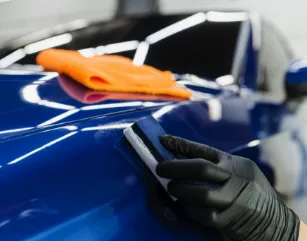
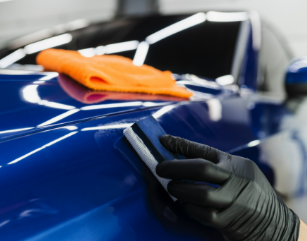
A ceramic coating is a liquid polymer, usually silica-based, that cross-links with the clear coat during curing. Once cured, it is a hard sacrificial layer measured in years, not months. Professional-grade coatings commonly run two to five years, and the better ones go longer with proper maintenance washing.
The coating resists UV fade, holds its hydrophobic beading through hundreds of washes, and makes contamination far harder to bond to your paint in the first place. It is the only one of the three that changes how much work the car needs, rather than just how it looks after you finish working on it.
How North Carolina Weather Changes the Math
This comparison plays out differently in Raleigh than it does in a dry climate, and it comes down to two local realities.
The first is pollen. March through May, the Triangle gets buried. Under magnification pollen has a spiky, abrasive surface, and once it gets wet it turns acidic and begins working on the clear coat. Leaving it to sit through a week of spring rain is how paint gets dull and stained. A coated car does not stop collecting pollen — it just releases it. Most of it comes off with a rinse instead of a contact wash, which means fewer wash-induced swirls over the life of the car.
The second is heat. June through September the sun load on a parked car in Garner is punishing, and UV is what breaks down wax and oxidizes paint over time. A coating's UV resistance is doing real work in those months. It is the same logic behind ceramic window tint on the inside of the glass — you are blocking degradation before it accumulates.
Fall adds its own problem. Leaf sap, bug splatter, and the tree debris that builds up in a driveway in Clayton or Apex are all acidic. They still need to come off promptly on a coated car. The coating buys you time, not immunity.
What a Ceramic Coating Will Not Do
This is where a lot of shops oversell, so we will be direct about the limits:
- It will not stop rock chips. A coating is microns thick. Highway debris on I-40 goes straight through it. Paint protection film is what stops chips — that is a different product for a different problem.
- It will not hide existing defects. Swirls, scratches, and oxidation get sealed in under the coating. That is why paint correction comes first, and why prep is the bulk of the labor.
- It will not make the car self-cleaning. You still wash it. You just wash it faster, with less scrubbing, and with far less risk of adding new swirls.
- It will not survive automatic brush washes forever. Touchless or two-bucket hand washing is what keeps a coating performing for years instead of months.
Which One Is Right for You
If you enjoy detailing your own car on weekends and you like the carnauba look, wax is a perfectly reasonable choice. Nobody needs to talk you out of it.
If you want decent protection without a big up-front number and you do not mind reapplying twice a year, a sealant covers you well.
A ceramic coating makes the most sense for a car you plan to keep, a vehicle that lives outside, a dark color that shows every swirl, or a lease you want to hand back in clean condition. Over a three-year window the coating usually costs less in time and product than repeated waxing — and the car looks considerably better the whole way through.
Prep Is Most of the Job
A coating is only as good as the surface underneath it. Our process runs a decontamination wash, iron and tar removal, a clay treatment, then machine paint correction to remove swirls before anything gets applied. The coating goes on panel by panel and needs controlled curing time indoors — which is why this is not a same-hour service and why a shop that promises one should give you pause.
If you are weighing ceramic coating against wax or sealant for a car in Garner, Raleigh, Clayton, Cary, Apex, or Holly Springs, come by and let us look at the paint first. We will tell you honestly whether correction is needed, what condition the clear coat is in, and whether a coating is worth it for how you actually use the vehicle. Call American Auto Connection at (919) 623-9450 to set up a walkthrough.